Showing posts with label steampunk movies. Show all posts

Tuesday, May 27, 2014

New steampunk style TV Series!

TV Review: Showtime’s New Gothic Drama ‘Penny Dreadful’

Josh Hartnett and Eva Green in Penny Dreadful.


Showtime’s newest scripted drama is a costumer set in late 19th Century called Penny Dreadful. “Penny dreadfuls” were Victorian-era sensational fictions, serialized for the masses. Showtime’s take, set in the 1890s is Gothic horror, complete with monsters, steamy, narrow London streets, a mysterious spiritualist, and a wealthy, brooding explorer with a missing daughter. Enter an American sharpshooter touring Europe as the lone survivor of Custer’s last stand, a missing child and corpses protected by exoskeletons and covered with ancient Egyptian hieroglyphics, and you have Penny Dreadful.

It is truly a delight to see Timothy Dalton playing the brooding Sir Malcolm , trying to find his daughter, “taken.” By whom or what, we do not know, and that mystery seems to form the premise of the new series. To find her, Sir Malcolm and his associate/friend/confidant Vanessa Ives (Eva Green) engage said American sharpshooter Ethan Chandler (Josh Hartnett) as muscle. But they are clearly going to need more than muscle as the trio believe they’ve found where the missing daughter might be found. They do not find her, but what they do find is horrifying, and the perfect stuff of Gothic horror–and penny dreadfuls.

Hints of vampirism, and hosts of other “undead” lurk in the dark, dank cellar beneath an opium den, and although Sir Malcom and Ethan manage to destroy these supernaturally evil dudes, we know (as do they) there are many more residing beneath London’s busy streets. They manage to cart away one of the corpses, bringing it to a laboratory where anatomists and surgeons are busy at work preparing limbs for medical school students. It is more slaughterhouse than laboratory, but there they find one young, arrogant “researcher” who is quite disinterested, until he actually examines the body. And what he finds is shocking them all. But the young man is on to something quite on his own as well, and how that factors into the story, I might only guess.

Penny Dreadful is beautifully shot and costumed; the settings of post Jack-the-Ripper London are evocative. The acting is great, if occasionally a bit over the top. Green as the mysterious Vanessa Ives appears as frail and corpse-like as we know she is not. This is a strong, resolute woman, and she clearly has a secret, well kept with her mate Sir Malcolm. Dalton was born to play the brooding Victorian with a secret life. 
(His Edward Rochester in the BBC Jane Eyre has never been bettered, and of course no one has ever played the brooding James Bond of Ian Fleming’s novels quite as literarily on the mark.) 
Hartnett is well cast as the cocky American who is quickly near out of his depth.

I’m intrigued by the pilot, and I’m curious, especially, about the relationship between Ives and Sir Malcolm, and how that is all tied into the disappearance of the daughter. The series creators promise Victor Frankenstein, Dorian Gray, and assorted characters out of the Dracula legend. Episode one introduces one of these iconic characters from 19th Century literature, and I’m anxious to learn how they will fit into the overarching danse macabre of Penny Dreadful.


Source: blogcritics.org

Thursday, May 1, 2014

Politics of Steampunk

"A debate which has been going on for quite some time: The politics of steampunk - in a world full of mad scientists, airships and class."


By Rjurik Davidson 4.Jun.12

The subgenre of Steampunk – that subgenre of speculative fiction set in a fantastical Victorian era filled with airships, mad scientists and mechanical replicas of people or animals – may well have reached its zenith. With the new Sherlock Holmes movies, The Golden Compass or Scorsese’s Hugo, it seems possible that the initial burst of zest and inspiration will now settle into a more subtle ticking over of novels and films as the subgenre colonises the cultural spaces still open to it (Heart of Darkness steampunk? Opium-war Steampunk?).

For some time a debate has been raging about the politics of the subgenre.

For some, Steampunk is a reactionary nostalgia for past that never happened. In a review last year, author and critic Adam Roberts claimed that Steampunk is a perfect example of Jameson’s claim that the culture of postmodernism means a loss of any sense of historicity. For Roberts, Steampunk is ‘a studied dismantling of the consecutiveness of history in the service of a particular set of styles and fashions.’ He continues:

the appeal of the genre is in the way it finesses the past into the present. This is an aesthetic strategy it shares with Heroic Fantasy (or much of it) as a mode: a disinclination to encounter the past as past. Most twenty-first century representations of a notional “past” are based on the idea that people in the nineteenth century (or, in post-Tolkienian Fantasy, the middle ages) were basically people exactly like us, and therefore people with whom it requires no effort from the reader to identify.

According to Roberts, Steampunk jettisons a sense of the logic of history. Fundamentally, the subgenre is an irrationalism.

Others have mounted similar arguments. A couple of years ago, science fiction author Charles Stross claimed on his blog that most steampunk refused to face up to the Nineteenth Century as it really was. In that world, Stross claimed:

Life was mostly unpleasant, brutish, and short; the legal status of women in the UK or US was lower than it is in Iran today: politics was by any modern standard horribly corrupt and dominated by authoritarian psychopaths and inbred hereditary aristocrats: it was a priest-ridden era that had barely climbed out of the age of witch-burning, and bigotry and discrimination were ever popular sports: for most of the population starvation was an ever-present threat. I could continue at length. It’s the world that bequeathed us the adjective “Dickensian”, that gave us a fully worked example of the evils of a libertarian minarchist state, and that provoked Marx to write his great consolatory fantasy epic, The Communist Manifesto. It’s the world that gave birth to the horrors of the Modern, and to the mass movements that built pyramids of skulls to mark the triumph of the will. It was a vile, oppressive, poverty-stricken and debased world and we should shed no tears for its passing (or the passing of that which came next).


Evan Calder Williams makes a different point in his book Combinded and Uneven Apocalypse. For him, steampunk is a ‘weak handmaiden of Obama-era capitalism.’ That is, he periodises steampunk according to the conjuncture, much as China Miéville once periodised the ‘New Weird’ according to the development of the anti-globalisation movement. For Evan Calder Williams, the promise behind steampunk is to ‘keep technology, keep consumption, but make it “thoughtful,” make it responsible, make it “sustainable.” All in all, a participation in that great pastime of the pseudo-Left, remembering the era that never was, back when life was simpler and labor was meaningful.’

But if there is a strong current of left critiques of steampunk, there are also those who defend it. In response to Roberts, Jeff Vandermeer, co-writer of The Steampunk Bible and co-editor of the anthologies Steampunk and Steampunk Reloaded, claimed that these sorts of readings were selective. Vandermeer wrote to Roberts that:

you’ve basically defined a subset of steampunk in your analysis rather than the totality of it, that you’ve decided to focus on one small cog in terms of the mindset behind it, I hope you’ll understand that the impulse to defend something that alas from the term itself *seems* intended to be nostalgic comes from somewhere decidedly *non-escapist*. This isn’t from any particular special love for steampunk fiction or from writing it myself – I don’t – but from simply having had to exhaustively document it and the whole creative subculture.

This response has two aspects to it. The first is a purely material objection: many of the works of steampunk don’t fit the claims of its critics. The second is that as a result, these critics get the definition of steampunk wrong. What is interesting is the way that this debate echoes an earlier debate between advocates of science fiction and those of fantasy. For many of the early critics of the genres, science fiction was a progressive form and fantasy the reactionary one. Science fiction was forward looking, a literature of ‘cognitive estrangement’ as critic Darko Suvin famously defined it, a way of rational thinking. It made you consider the way the world of the story worked (the cognitive side of the definition), the rules of the social structure, if you like, and this made the reader reflect back on our own world. If you present a world without sexism or racism, this naturally makes the reader ask, ‘what causes these discriminations in our world?’

According to these critics, fantasy was instead irrationalist; for Suvin, it was a ‘sub-literature of mystification’. It didn’t operate according to the rules of science (either social or the ‘hard’ sciences). It was obsessed with the return to a romanticised neo-feudal world, in which the highest political aspiration was to be ruled by a benevolent ‘king’, be that Aragorn or the kitchen-hand who, unbeknown to himself, was deposed by an evil lord and is yet to realise his destiny. We can be sure that by the end of the series, the king will be restored to his throne, order will be reinstituted (with everyone in their place) and everything will be right with the world.

But this long-accepted critique was blown apart by writers of the ‘New Weird’, another subgenre of speculative fiction who (recalling the writers of the 1930s) broke down the boundaries of science fiction and fantasy. China Miéville’s books were probably at the forefront of this, but just as important was the introduction he wrote for the journalHistorical Materialism’s symposium on fantasy. For Miéville:

The usual charge that fantasy is escapist, incoherent or nostalgic (if not downright reactionary), though perhaps true for great swathes of the literature, is contingent on content. Fantasy is a mode that, in constructing an internally coherent but actually impossible totality – constructed on the basis that the impossible is, for this work, true – mimics the ‘absurdity’ of capitalist modernity.

Indeed, for Miéville, the fantastic is embedded in contemporary capitalism, both in the ways that commodification works and in the way that the human imagination is part of the productive cycle. Real life under capitalism is a fantasy.

Moreover, for Miéville, fantasy can have exactly the same ‘cognition effect’ as science fiction. A fantastic novel about class, race or sexuality might have greater insight into contemporary reality as a novel about the bickering of a middle-class family isolated from great social struggles. In other words, fantasy can be just as good to think with as science fiction. But it depends more on the work itself rather than the specific form.

These arguments seem to me to be true also of steampunk. The point is not so much the ‘content’ of the fiction, but rather the attitude of the work to its own content. Just as one can write a nostalgic view of the Victorian era from the point-of-view of the aristocracy, so one could write a critical view from the point of view of marginalised. Steampunk, like many cultural forms, is a thus site of struggle. The real divisions lie not between genres, it seems to me, but across them.

Source: overland.org.au

Wednesday, April 30, 2014

Between 2 Worlds...

"Living steampunk to the fullest - a nice little read about the passion of Artists and the magic of this Genre."

From left, Deacon Boondini, the Great Gatsby and Giovanni James of the James Gang share a vision with the designer Alexander McQueen. By RUTH LA FERLA; Published: May 8, 2008


“MEET Showtime,” said Giovanni James, a musician, magician and inventor of sorts, introducing his prized dove, who occupies a spacious cage in Mr. James’s apartment in Midtown Manhattan. Showtime is integral to Mr. James’s magic act and to his décor, a sepia-tone universe straight out of the gaslight era.

The lead singer of a neovaudevillian performance troupe called the James Gang, Mr. James has assembled his universe from oddly assorted props and castoffs: a gramophone with a crank and velvet turntable, an old wooden icebox and a wardrobe rack made from brass pipes that were ballet bars in a previous incarnation.


Yes, he owns a flat-screen television, but he has modified it with a burlap frame. He uses an iPhone, but it is encased in burnished brass. Even his clothing — an unlikely fusion of current and neo-Edwardian pieces (polo shirt, gentleman’s waistcoat, paisley bow tie), not unlike those he plans to sell this summer at his own Manhattan haberdashery — is an expression of his keenly romantic worldview.

It is also the vision of steampunk, a subculture that is the aesthetic expression of a time-traveling fantasy world, one that embraces music, film, design and now fashion, all inspired by the extravagantly inventive age of dirigibles and steam locomotives, brass diving bells and jar-shaped protosubmarines. First appearing in the late 1980s and early ’90s, steampunk has picked up momentum in recent months, making a transition from what used to be mainly a literary taste to a Web-propagated way of life.

To some, “steampunk” is a catchall term, a concept in search of a visual identity. “To me, it’s essentially the intersection of technology and romance,” said Jake von Slatt, a designer in Boston and the proprietor of the Steampunk Workshop (steampunkworkshop.com), where he exhibits such curiosities as a computer furnished with a brass-frame monitor and vintage typewriter keys.

That definition is loose enough to accommodate a stew of influences, including the streamlined retro-futurism of Flash Gordon and Japanese animation with its goggle-wearing hackers, the postapocalyptic scavenger style of “Mad Max,” and vaudeville, burlesque and the structured gentility of the Victorian age. In aggregate, steampunk is a trend that is rapidly outgrowing niche status.

“There seems to be this sort of perfect storm of interest in steampunk right now,” Mr. von Slatt said. “If you go to Google Trends and track the number of times it is mentioned, the curve is almost algorithmic from a year and a half ago.” (At this writing, Google cites 1.9 million references.)

“Part of the reason it seems so popular is the very difficulty of pinning down what it is,” Mr. von Slatt added. “That’s a marketer’s dream.”

Devotees of the culture read Jules Verne and H. G. Wells, as well as more recent speculative fiction by William Gibson, James P. Blaylock and Paul Di Filippo, the author of “The Steampunk Trilogy,” the historical science fiction novellas that lent the culture its name. They watch films like “The City of Lost Children” (with costumes designed by Jean Paul Gaultier), “The League of Extraordinary Gentlemen” and “Brazil,” Terry Gilliam’s dystopian fantasy satirizing the modern industrial age; and they listen to melodeons and Gypsy strings mixed with industrial goth.

They build lumbering contraptions like the steampunk treehouse, a rusted-out 40-foot sculpture assembled last year at the Burning Man festival in Nevada and unveiled last month at the Coachella music festival in Southern California. They trawl eBay for saw-tooth cogs and watch parts to dress up their Macs and headsets, then show off their inventions to kindred spirits on the Web.

And, in keeping with the make-it-yourself ethos of punk, they assemble their own fashions, an adventurous pastiche of neo-Victorian, Edwardian and military style accented with sometimes crudely mechanized accouterments like brass goggles and wings made from pulleys, harnesses and clockwork pendants, to say nothing of the odd ray gun dangling at the hip. Steampunk style is corseted, built on a scaffolding of bustles, crinolines and parasols and high-arced sleeves not unlike those favored by the movement’s designer idols:Nicolas Ghesquiere of Balenciaga, Alexander McQueen and, yes, even Ralph Lauren.

Quaint to some eyes, or outright bizarre, steampunk fashion is compelling all the same. It is that rarity, a phenomenon with the potential to capture a wider audience, offering a genteel and disciplined alternative to both the slack look of hip-hop and the menacing spirit of goth.

The elaborate mourning dresses, waistcoats, hacking jackets and high-button shoes are goth’s stepchildren, for sure, but the overall look is “not so much eyeliner and fishnets,” said Evelyn Kriete, who sells advertising space for magazines like Steampunk, The Willows and Weird Tales, and who manages Jaborwhalky Productions (jaborwhalky.com), a steampunk Web site.

Ms. Kriete and her eccentrically outfitted cohort of teachers, designers, writers and medical students, drew stares last week at a picnic at the Cloisters in Manhattan, but provoked no shudders or discernible hostility.

“As a subculture, we are not the spawn of Satan,” Ms. Kriete said. “People smile when they see us. They want to take our picture.”

Robert Brown, the lead singer for Abney Park, a goth band that has reinvented itself as steampunk, echoed her sentiments. “Steampunk is not dark and spooky,” he said. “It’s elegant and beautiful.”

Even heroic, if you like. The movement may have a postapocalyptic strain, but proponents tend to cast themselves as spirited survivors. Molly Friedrich, an artist and a jewelry designer in Seattle, approaches steampunk, she said, “from a perspective of 1,000 years into the future, after society has crumbled but people have chosen to live in Victorian fashion, wearing scavenged clothes.” In keeping with her vision, Ms. Friedrich has devised an alternate identity composed of petticoats, old military storm coats, goggles and aviator caps with an Amelia Earhart flair.

She takes her emotional cues from scientists and inventors like Nikola Tesla, magicians likeHarry Houdini and soulful spies like Mata Hari, each of whom injected a spirit of enterprise, intrigue and discovery into their age. Contemporary fictional parallels in film include the wildly ingenious scientist played by Robert Downey Jr. in “Iron Man,” who hopes to save the world by retooling himself as a flame-throwing robot made of unwieldy scrap metal parts.

If steampunk has a mission, it is, in part, to restore a sense of wonder to a technology-jaded world. “Today satellite photos make the planet seem so small,” Mr. Brown lamented. “Where is the adventure it that?” In contrast, steampunk, with its airships, test tubes and time machines, is, he said, “sort of a dream , the way we used to daydream. It’s like part of your childhood’s just bursting forward again.”

For some of its adherents, steampunk also offers a metaphoric coping device. “It has an intellectual tie to the artists and artisans dealing with a world in turmoil at the time of the industrial revolution,” said Crispen Smith, a Web designer and photographer in Toronto, and a partner in a steampunk fashion business.

Now, as in the late 19th century, “we have to find a way to deal with new ethical quandaries,” Mr. Smith said, alluding to issues like cloning, the dissemination of information and intellectual property rights on the Web.

Steampunk style is also an expression of a desire to return to ritual and formality. “Steampunk has its tea parties and its time-travelers balls,” said Deborah Castellano, who presides over salonconvention.com, which organizes neo-Victorian conventions. “It offers an element of glamour that some of us would otherwise never experience.”

And an enticing marketing hook. The Bombay Company is selling steampunk-style brass home accessories, instruments like astrolabes and sextants. A steampunk fantasy game, Edge of Twilight, will be introduced by Xbox 360 and PlayStation next year.

And steampunk fashion, which until now has been a mainstay of craft fairs and destinations like eBay and Etsy, the online market for handmade clothing designs and artifacts, is finding its way into the brick and mortar world.

Gypsymoon.com has begun offering its cream and umber petticoats, an Air Pirate ruched tunic and Time Machine bloomers at boutiques. Abney Park is selling swallowtail tuxedos, antiqued flight helmets and airship pirate T-shirts, like those it wears on stage, atabneypark.com and at concerts across the country.

Mr. James, who performs with his troupe at the Box, the music-hall hideaway on the Lower East Side, has just leased space for a steampunk shop in NoLIta. He plans to offer brass Rubik’s cubes, riding boots, early-20th-century-style motorbikes, handmade leather mailbags and brass or wooden iPhone cases, all under the label TJG Engineering.

There will, of course, be a clothing line with vintage and new looks modeled on Mr. James’s own neo-Edwardian sartorial signature. “I’m so sick of baggy pants hanging off your bottom,” he said. “This is more refined. It goes back to a time when people had some dignity.

“It’s a new day.”


Source: nytimes.com

Batman's Helmet

"D.C. here's an idea for the next movie: If Batman Went Steampunk, He’d Wear This Helmet"


It seems like everyone is going steampunk these days. Batman isn’t exactly the kind of guy who follows trends, but if Alfred talked him into it, he’d try and he’d probably go for a handmade mask like this one by Skinz-N-Hydez. You could build this mask and an entire outfit to go with it for a convention or a renaissance faire. Here’s what it was made from:

Hand cut and moulded. Hand painted and aged, riveted together using brass rivets to give it a steampunk vibe.
Color: dark brown and black
Material: 7-8oz Eco friendly veg tanned cowhide leather
Hardware: brass rivets and buckle

Source: adafruit.com

Tuesday, April 29, 2014

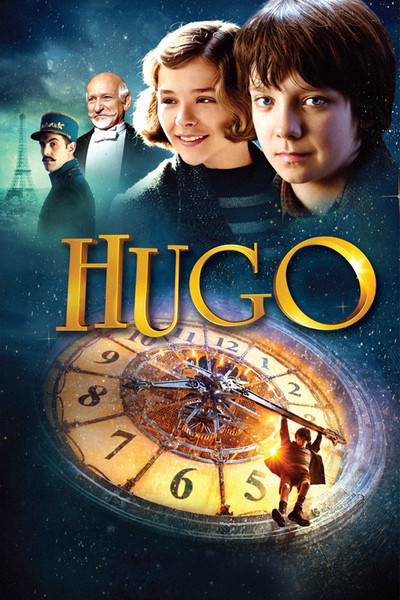
Hugo...a must see!

"A successful adaption to Brian Selznick's book: The Invention of Hugo Cabret - a fantastic steampunk movie by Mr. Martin Scorsese!"


"Hugo" is unlike any other film Martin Scorsese has ever made, and yet possibly the closest to his heart: a big-budget, family epic in 3-D, and in some ways, a mirror of his own life. We feel a great artist has been given command of the tools and resources he needs to make a movie about — movies. That he also makes it a fable that will be fascinating for (some, not all) children is a measure of what feeling went into it.

In broad terms, the story of his hero, Hugo Cabret, is Scorsese's own story. In Paris of the '30s, and schooling himself in the workings of artistic mechanisms. That runs in the family. Hugo's uncle is in charge of the clocks at a cavernous Parisian train station. And his father's dream is to complete an automaton, an automated man he found in a museum. He dies with it left unperfected.

Rather than be treated as an orphan, the boy hides himself in the maze of ladders, catwalks, passages and gears of the clockworks themselves, keeping them running right on time. He feeds himself with croissants snatched from station shops and begins to sneak off to the movies.
His life in the station is made complicated by a toy shop owner named Georges Melies. Yes, this grumpy old man, played by Ben Kingsley, is none other than the immortal French film pioneer, who was also the original inventor of the automaton. Hugo has no idea of this. The real Melies was a magician who made his first movies to play tricks on his audiences.

Leave it to Scorsese to make his first 3-D movie about the man who invented special effects. There is a parallel with the asthmatic Scorsese, living in Little Italy but not of it, observing life from the windows of his apartment, soaking up the cinema from television and local theaters, adopting great directors as his mentors, and in the case of Michael Powell, rescuing their careers after years of neglect.

The way "Hugo" deals with Melies is enchanting in itself, but the film's first half is devoted to the escapades of its young hero. In the way the film uses CGI and other techniques to create the train station and the city, the movie is breathtaking. The opening shot swoops above the vast cityscape of Paris and ends with Hugo (Asa Butterfield) peering out of an opening in a clock face far above the station floor. We follow his Dickensian adventures as he stays one step ahead of the choleric Station Inspector (Sacha Baron Cohen), in chase sequences through crowds of travelers. Hugo always manages to escape back to his refuge behind the walls and above the ceiling of the station.

His father (Jude Law), seen in flashbacks, has left behind notebooks, including his plans to finish the automaton. Hugo seems somewhat a genius with gears, screws, springs and levers, and the mechanical man is himself a steampunk masterwork of shining steel and brass.

One day Hugo is able to share his secret with a girl named Isabelle (Chloe Grace Moretz), who also lives in the station, and was raised by old Melies and his wife. She is introduced to Hugo's secret world, and he to hers — the books in the cavernous libraries she explores. These two bright kids are miles apart from the cute little pint-sized goofballs in most family pictures.

For a lover of cinema, the best scenes will come in the second half, as flashbacks trace the history and career of Georges Melies. you may have seen his most famous short film, "A Trip to the Moon" (1902), in which space voyagers enter a ship that is shot from a cannon toward the moon; the vessel pokes the Man in the Moon in the eye.

Scorsese has made documentaries about great films and directors, and here he brings those skills to storytelling. We see Melies (who built the first movie studio) using fantastical sets and bizarre costumes to make films with magical effects ­— all of them hand-tinted, frame by frame. And as the plot makes unlikely connections, the old man is able to discover that he is not forgotten, but indeed is honored as worthy of the Pantheon.

Not long ago, I saw a 3-D children's film about penguins. I thought it was a simpleminded use of the medium. Scorsese uses 3-D here as it should be used, not as a gimmick but as an enhancement of the total effect. Notice in particular his re-creation of the famous little film "Arrival of a Train at La Ciotat" (1897), by the Lumiere brothers. You've probably heard its legend: As a train rushes toward the camera, the audience panics and struggles to get out of its way. That is a shot which demonstrates the proper use of 3-D, which the Lumieres might have used had it been available.

"Hugo" celebrates the birth of the cinema and dramatizes Scorsese's personal pet cause, the preservation of old films. In one heartbreaking scene, we learn that Melies, convinced his time had passed and his work had been forgotten, melted down countless films so that their celluloid could be used to manufacture the heels of women's shoes. But they weren't all melted, and at the end of "Hugo, " we see that thanks to this boy, they never will be. Now there's a happy ending for you.

Source: rogerebert.com