Showing posts with label steampunk western. Show all posts

Wednesday, July 30, 2014

Steampunk your home!

21 Cool Tips To Steampunk Your Home

The steampunk style is not one of the most well known in terms of interior design. Maybe that’s because many of us don’t even know which are the basic details that define this concept. When I say steampunk, I remember about the Victorian era, with all the inventions back then, but the meaning of this word would be incomplete without the industrial details.
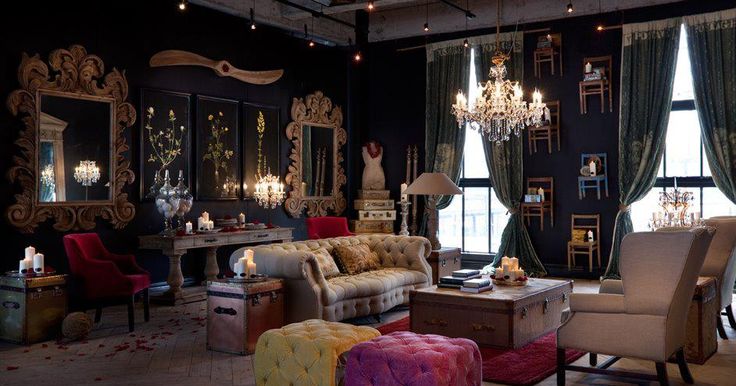
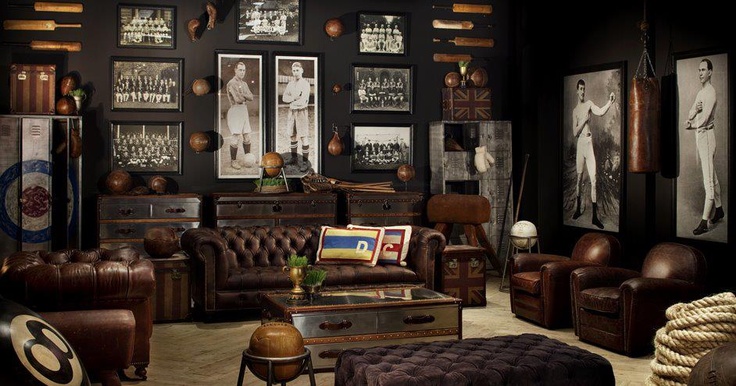

In essence, this trend is a mixture between elegant Victorian interior accessories and the strength of industrial elements. Maybe you remember about Joben Bistro, that beautiful pub from Romania. It’s an inspiration for us.

So, give your home a steampunk look with these awesome décor ideas and items!


1. Use muted neutral colors


Brown, sepia, cream, black, dark red and dark green, these are the most common colors used to describe this style. Choose one of them according to the room, or combine them if you want. Also, metallic colors should work.

2. Don’t be afraid to use refurbished furniture


It’s a fact that old furniture adds a special charm to any home. If you want to create a steampunk interior design don’t even think about buying new furniture, unless it’s specific to Victorian age.

3. Add an industrial touch with exposed bricks


Another idea will be to induce an industrial feeling by showcasing exposed bricks walls. If the structure of the building doesn’t allow you to do that, use wallpaper.

4. Decorate with old maps


Create awesome wall murals using old maps, or just frame some of them and hang them on your walls. Another idea is to decorate the lampshades with maps. The older, the better! You’ll love the result!

5. Buy a terrestrial globe (in case you don’t have one already)


Make sure it’s old and very used. It would be one of the most popular items in the house, and kids would love to spin it over and over again.

6. Expose leather items or furniture


Leather sofa and chairs are definitely a must for steampunk admirers. It’s one of the most important materials used to define this trend. Not only comfortable, but also elegant, this material increases the luxury level of your home.

7. Classy hats will bring elegance and style


Top-hats or bowler hats can be used to impress your guests. Because they are symbols of the Victorian era, they will easily become a part of your steampunk decor.

8. Victorian sewing tables


A Victorian sewing table always has a history and that’s why it will easily become a new source of inspiration for your visitors. If you don’ t have such a beautiful item in your home, try the antique stores.

9. Decorate your walls with gear wall clocks


Gears are important items of the steampunk culture, so don’t forget about them. Let your imagination run wild! A gear wall clock will certainly make a statement, but you can also use them to create and display industrial art pieces.

10. Use an old steamer trunk as a living room table


Sometimes you must improvise in order to obtain the desired result. If you don’t have a proper table for this kind of interior design, use a steamer trunk or any other suitcase to fill the empty space.

11. Use exposed framed herbariums


Sometimes we do our best to properly decorate the rooms of our house, but we forget about the entrance. Your hallway would never look more beautiful and sophisticated without those framed herbariums.

12. Decorate with sepia pictures


Create an antique effect by using sepia photos to decorate your walls. It’s your choice whether you use old pictures with your family, or with other places around the world.

13. Add some details by exposing technical and anatomical drawings


These kinds of sketches are highly representative for this trend. If you happen to have something like that among your personal things or you’re an engineer, don’t hesitate to use them.

14. Expose antique items like barometers, telescopes or typewriters


Victorians had a passion for inventing new tools and gadgets, and the best part is the fact that you can still find them in antique shops. Even though many of them are not functional, you can use them as decorating items.

15. Try textural contrast


You can create a steampunk interior décor if you manage to combine a hard material (leather) and a soft one, like lace. So, part of the appeal of steampunk is the juxtaposition of traditionally feminine and masculine elements.

16. Expose a Victorian dress, or canes, or helmets on the wall


Maybe some of you will consider this a creepy idea, but I think it’s worth a chance. Canes or helmets are also a good choice, and they are certainly easier to find in antique shops.

17. Don’ t forget about small wood jewelry boxes


Walk up to your local hardware store and buy some small metal pieces like gears, or screws or anything else that could be glued to the wooden box. You won’t regret this!

18. Use wallpapers with a Victorian pattern


If you don’t really like those, and you happen to be a talented painter, try something new: paint some creatures in the books of Jules Verne, or some mechanical installations you remember from Time Machine.

19. Display old books


Old books are a must in this case! Hard covered books are usually used, but paperbacks are also welcomed. Old notebooks with leather covers will also make a statement if they are tastefully arranged.

20. Create a metal pipe bookshelf


Industrial all the way, even when we talk about ideas to display your books! Steel pipes are elementary in industrial design and quite easy to handle. Here we have a special article about how you can recycle steel pipes. Have a look!

21. Add a chandelier


Light fixtures are always important. Through light you can easily emphasize the interior design of the room and even the furniture. If you have high ceilings, use a chandelier. Bring a little luxury and comfort!

Source: homedit.com

Friday, May 30, 2014

Abraham Lincoln’s Steampunk Presidency!


"The only commander-in-chief to hold a patent presided over one of the country’s most inventive periods."
By Jacopo della Quercia

President Lincoln welcomed inventors to the White House, and presided over a technological boom that flooded the U.S. Patent Office with thousands of new inventions.
Photo illustration by Juliana Jiménez Jaramillo. Photos via Tyrus Flynn/CC and Alexander Gardner/LOC.

When most people picture Abraham Lincoln, “inventor” is probably not the first image that comes to mind. After all, our nation’s 16th president already enjoys widespread recognition as “Honest Abe,” the “Great Emancipator,” the fallen “Captain” from Walt Whitman’s poems, the “political genius” from Doris Kearns Goodwin’s Team of Rivals, and—at least in our imagination—both a vampire hunter and an incarcerated time traveler in San Dimas. The idea that Honest Abe was an inventor to boot may sound like the stuff of steampunk fantasy, but the truth is he was a patented inventor whose lifelong appreciation for innovation spurred a technological revolution of global consequences. In hindsight, the remarkable journey of Abraham Lincoln as an inventor reads like the closest thing in U.S. history to a steampunk presidency.


The Union was fortunate to have elected its only inventor-president in 1860.


It should not be too surprising that young Abe Lincoln shares more in common with Doc Brown than Van Helsing, but it has little to do with science fiction and everything to do with the U.S. Patent Office. Specifically, U.S. Patent No. 6,469: a device for “buoying vessels over shoals” according to its inventor, a 40-year-old Abraham Lincoln. Apparently, this self-taught prairie lawyer also taught himself how to buoy vessels in his early 20s, when a flatboat he worked on ran aground on a milldam in New Salem, Illinois. As retold by his friend and bodyguard Ward Hill Lamon: “the boat stuck for one night and the better part of a day ... in momentary danger of breaking in two, or sinking outright.” Fortunately, the 23-year-old Lincoln was able to engineer his way out of the predicament with a “singular experiment” that everyone in New Salem apparently came to watch. Despite reading like a mix between a folk tale and a 19th-century episode of MacGyver, such is the fascinating history behind the device currently on display in the Smithsonian as the first and only patented invention attributed to a U.S. president.

Whether or not this New Salem episode marks the beginning of Lincoln’s interest in engineering, it clearly left an impression which he carried all the way to Washington, D.C., two decades later. According to historian Jason Emerson in his aptly titled Lincoln the Inventor:

Lincoln was so enamored of inventions and mechanics that during his first session as a Congressman, he took his four-year-old son, Robert, to the U.S. Patent Office to examine the invention models on public display. The visit must have been an awe-inspiring revelation to the two Lincolns.

Robert Todd Lincoln, who so shared his father’s passions that he even installed a private observatory in his Manchester mansion, cherished their visit to the U.S. Patent Office as one of his fondest memories. As for Abraham, his experience as an inventor soon blossomed into an appreciation for the patent system, which he believed “added the fuel of interest to the fire of genius.”

As a wartime president, Abraham Lincoln quickly found himself in a unique position to oversee and approve some of the latest developments for the U.S. military. Lincoln welcomed inventors to the White House, personally tested some of the new rifles being developed, and presided over a technological boom that flooded the U.S. Patent Office with thousands of new inventions. Among these were the Gatling gun, repeating rifles, and, perhaps most revolutionary of all, a remarkable, iron-hulled warship that, much like Jules Verne’s Nautilus, was “a masterpiece containing masterpieces.” That is, he helped oversee the creation of the USS Monitor—an invention containing more than 40 patentable inventions.

When Swedish-American inventor John Ericsson approached the U.S. Navy with his designs for a most unusual ironclad steamship, it was understandably met with skepticism. One sailor reported that the Monitor resembled “a cheese-box on a shingle” while crueler critics ridiculed the idea as “Ericsson’s folly.” However, with the Confederates developing an ironclad of their own, the Virginia, Lincoln overruled Ericsson’s detractors and approved the warship. “All I have to say,” Lincoln remarked after inspecting a model of the vessel, “is what the girl said when she stuck her foot into the stocking. It strikes me there's something in it.”

Once the futuristic gunboat was completed, it met the Confederate ironclad Virginia for the most technologically consequential naval engagement of the 19th century: the battle of Hampton Roads. The previous day had been a disaster for the wooden ships of the U.S. Navy, and Lincoln’s Secretary of War Edwin M. Stanton feared the Virginia might steam up the Potomac and shell Washington. Could such a horrific scenario have befallen the Lincoln White House? Lincoln’s Naval Secretary Gideon Welles doubted it when asked directly. “I told the President [the Virginia] could not ... with her heavy armor, cross the Kettle Bottom Shoals.” Apparently, the Confederate Navy had not perfected a method for buoying vessels over shoals as well as Lincoln did.

The clash between the ironclads on March 9, 1862, was as revolutionary as it was bizarre. None of the skeptics in Washington could compare to Confederate reactions to the Monitor: “An immense shingle floating in the water, with a gigantic cheese-box rising from its center; no sails, no wheels, no smokestack, no guns. What could it be?” Fighting so close that the two gunboats rammed each other repeatedly, the Monitor and the Virginia engaged in what was ultimately an indecisive standoff. However, long before the Virginia withdrew from the fighting, the winner to all the navies of the world was obvious: The ironclad had effectively trumped every wooden ship ever built. “Nine-tenths of the British Navy have been rendered comparatively useless,” observed the London Times. Sir John Hay of the British Naval Commission was more damning: “The man who goes into action in a wooden ship is a fool, and the man who sends him there is a villain.” Ericsson’s inventions and Lincoln’s instincts had completely changed the way wars would be fought.

As a revolutionary weapon made possible by a president who was able to appreciate its many marvels, it was not long before Abraham Lincoln got to inspect the USS Monitor up close. The president visited the vessel and its crew on May 7, 1862, during which time “he examined everything about the vessel with care, manifesting great interest, his remarks evidently showing that he had carefully studied what he thought to be our weak points & that he was well acquainted with all the mechanical details of our construction.” It was a radical departure from the wooden flatboat of Lincoln’s youth, but one familiar to a mind as inventive and industrious as his own.

In hindsight, it appears the Union was fortunate to have elected its only inventor-president in 1860. Although Lincoln’s support for technological innovation was not a factor for most voters, it completely revolutionized the nation he presided over. The tools of war changed in ways that would more closely resemble World War I not only through the Monitor, but due to the inventive nature of Lincoln’s generals Grant and Sherman at trench and modern warfare. The tools of industry expanded to include such useful items as the twist drill and ratchet wrench. In the Midwest, construction of the nation’s First Transcontinental Railroad began at Council Bluffs, Iowa: a site chosen by President Lincoln. The number of patents issued by the U.S. government doubled from 1861 to 1865, and by 1866, the number tripled. The stage was set for a second Industrial Revolution that Abraham Lincoln would never see, but helped invent.

Source: slate.com

Tuesday, May 27, 2014

New steampunk style TV Series!

TV Review: Showtime’s New Gothic Drama ‘Penny Dreadful’

Josh Hartnett and Eva Green in Penny Dreadful.


Showtime’s newest scripted drama is a costumer set in late 19th Century called Penny Dreadful. “Penny dreadfuls” were Victorian-era sensational fictions, serialized for the masses. Showtime’s take, set in the 1890s is Gothic horror, complete with monsters, steamy, narrow London streets, a mysterious spiritualist, and a wealthy, brooding explorer with a missing daughter. Enter an American sharpshooter touring Europe as the lone survivor of Custer’s last stand, a missing child and corpses protected by exoskeletons and covered with ancient Egyptian hieroglyphics, and you have Penny Dreadful.

It is truly a delight to see Timothy Dalton playing the brooding Sir Malcolm , trying to find his daughter, “taken.” By whom or what, we do not know, and that mystery seems to form the premise of the new series. To find her, Sir Malcolm and his associate/friend/confidant Vanessa Ives (Eva Green) engage said American sharpshooter Ethan Chandler (Josh Hartnett) as muscle. But they are clearly going to need more than muscle as the trio believe they’ve found where the missing daughter might be found. They do not find her, but what they do find is horrifying, and the perfect stuff of Gothic horror–and penny dreadfuls.

Hints of vampirism, and hosts of other “undead” lurk in the dark, dank cellar beneath an opium den, and although Sir Malcom and Ethan manage to destroy these supernaturally evil dudes, we know (as do they) there are many more residing beneath London’s busy streets. They manage to cart away one of the corpses, bringing it to a laboratory where anatomists and surgeons are busy at work preparing limbs for medical school students. It is more slaughterhouse than laboratory, but there they find one young, arrogant “researcher” who is quite disinterested, until he actually examines the body. And what he finds is shocking them all. But the young man is on to something quite on his own as well, and how that factors into the story, I might only guess.

Penny Dreadful is beautifully shot and costumed; the settings of post Jack-the-Ripper London are evocative. The acting is great, if occasionally a bit over the top. Green as the mysterious Vanessa Ives appears as frail and corpse-like as we know she is not. This is a strong, resolute woman, and she clearly has a secret, well kept with her mate Sir Malcolm. Dalton was born to play the brooding Victorian with a secret life. 
(His Edward Rochester in the BBC Jane Eyre has never been bettered, and of course no one has ever played the brooding James Bond of Ian Fleming’s novels quite as literarily on the mark.) 
Hartnett is well cast as the cocky American who is quickly near out of his depth.

I’m intrigued by the pilot, and I’m curious, especially, about the relationship between Ives and Sir Malcolm, and how that is all tied into the disappearance of the daughter. The series creators promise Victor Frankenstein, Dorian Gray, and assorted characters out of the Dracula legend. Episode one introduces one of these iconic characters from 19th Century literature, and I’m anxious to learn how they will fit into the overarching danse macabre of Penny Dreadful.


Source: blogcritics.org

Sunday, May 4, 2014

Dead Man’s Hand...

"...An anthology to the Weird West - Titan Books publishes Dead Man’s Hand – An Anthology of the Weird West, an exclusive “weird western” collection edited by John Joseph Adams, that includes stories from many of today’s most celebrated authors – some new to the genre."

The twenty-two original works — produced specifically for this volume — ranges from a brand new Orson Scott Card tale (his first “Alvin Maker” story in a decade), to an original adventure by Fred Van Lente (creator of Cowboys & Aliens). It also will include stories such as Elizabeth Bear’s account of a steampunk bordello, and new writer Rajan Khanna’s exploration of sorcery found in a magical deck of playing cards.

“The weird western is the forefather of steampunk, with a history that includes Stephen King’s Dark Tower and Card’s Alvin Maker,” editor John Joseph Adams explains. “But where steampunk is Victorian, weird westerns are darker, grittier, so the protagonist might be gunned down in a duel, killed by a vampire, or confronted by aliens on the streets of a dusty frontier town.”
“The phrase “dead man’s hand’ refers to the poker hand held by Wild Bill Hickok when he was shot and killed by the coward Jack McCall. 
“What the hand actually was seems to be open to some debate,” Adams continues. “I suppose the only way we could ever know for sure would be to reanimate his corpse or to travel back in time … both of which are the stuff of the “weird western” tale—stories of the Old West infused with elements of the fantastic.”

Other contributors include Jonathan Maberry, Mike Resnick, Kelley Armstrong, Jeffrey Ford, Tobias Buckell, Seanan McGuire, Walter Jon Williams, David Farland, Alan Dean Foster, Beth Revis, Laura Anne Gilman, Charles Yu, and Alastair Reynolds.

JOHN JOSEPH ADAMS (www.johnjosephadams.com) is the bestselling editor of popular anthologies such as Epic: Legends of Fantasy, Wastelands, The Living Dead, By Blood We Live, and Oz Reimagined. A six-time Hugo Award finalist, he is the editor and publisher of the magazines Lightspeed and Nightmare. John co-hosts Wired.com’s The Geek’s Guide to the Galaxy podcast.

Source: steampunkjournal.org